On this page
IRS Form 8888: How to Split Your Tax Refund Between Accounts
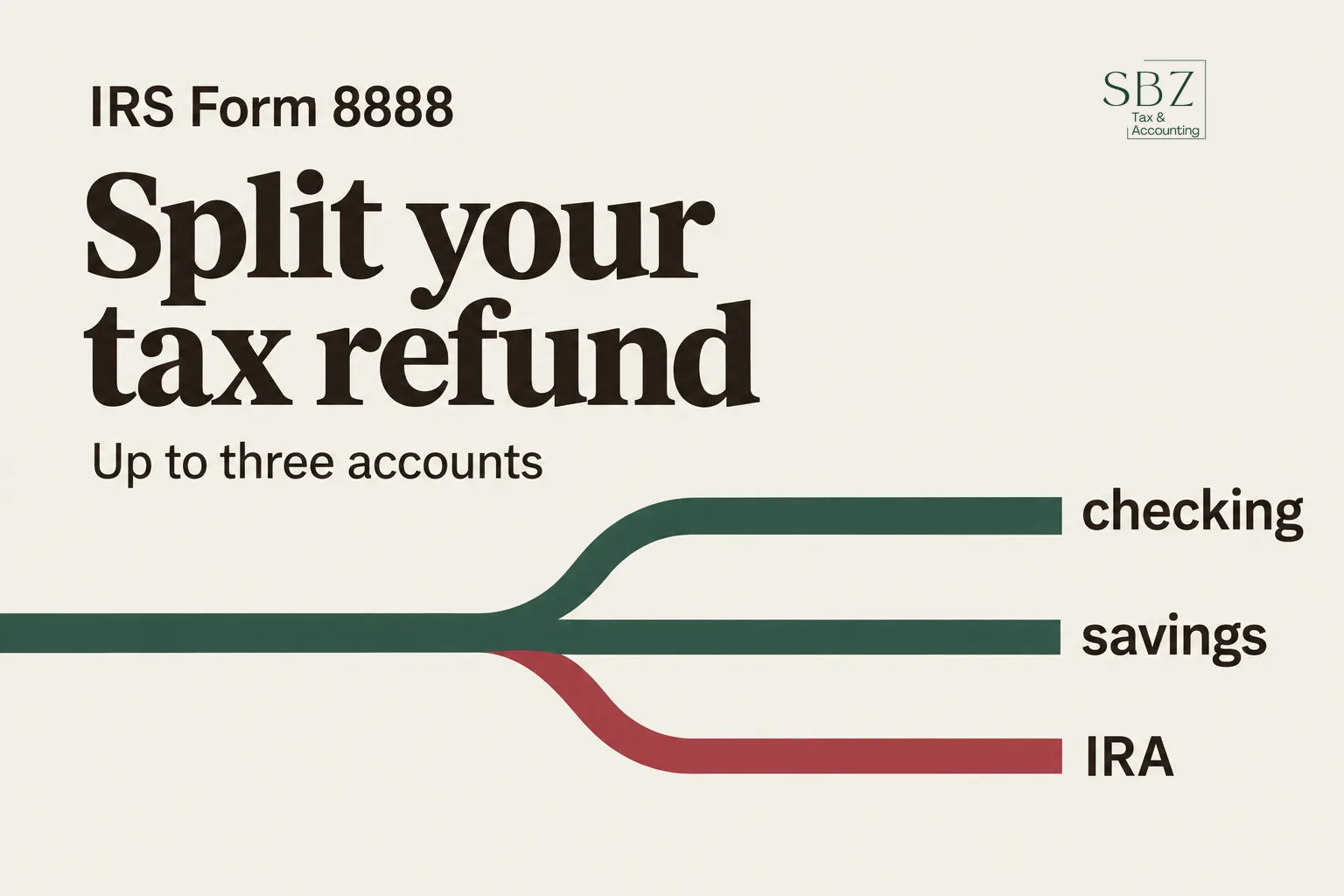
IRS Form 8888, Allocation of Refund (Including Savings Bond Purchases), is the form you attach to your return to split your federal refund among up to three accounts instead of sending it all to one. Those can be checking, savings, brokerage, or retirement accounts. Here's the short version of how it works and when it's worth using.
What is IRS Form 8888 used for?
Form 8888 tells the IRS to divide your refund by dollar amount across as many as three accounts. Each account gets its own line with a routing number, an account number, an account type, and the amount you want deposited.
Typical uses include sending part of a refund to a savings account, part to an IRA, and the rest to checking. The form is filed with your return, such as Form 1040. It is not a standalone request you can submit later.
The form's title still mentions savings bonds. The IRS has been phasing out paper savings bond purchases through the form, so read the current-year instructions before planning around that option.
When should you use Form 8888?
Use it when you want a deliberate split instead of moving the money yourself after it lands. It's most useful in a few situations:
- You want a set amount going straight to savings or an emergency fund.
- You want part of the refund to land in an IRA or other account that accepts the deposit.
- You and a spouse want to divide a joint refund between separate accounts.
- You want to set money aside for estimated tax payments before you can spend it.
If you only need the whole refund in one account, skip the form. The direct deposit lines on the return itself are enough.
How do you fill out Form 8888?
Each of the three sections works the same way. In plain terms:
- Routing number. The nine-digit number for the financial institution.
- Account number. The full number for the specific account.
- Account type. Check the box for checking or savings.
- Amount. The exact dollar amount to send to that account.
Then add the amounts together. The total of all lines must equal the refund shown on your return, and you enter that total on the line the form directs you to. If the numbers don't match, the IRS may issue a paper check or reject the allocation.
Double-check the routing and account numbers before you file. A transposed digit can send money to the wrong place or bounce it back, and fixing that takes weeks. If a refund goes missing, Form 3911 is how you start a trace.
Can you e-file Form 8888?
Yes. Most tax software prepares Form 8888 for you when you choose to split your refund. You answer the prompts and the software places the figures on the form. When you sign the return electronically, Form 8879 authorizes the e-file, and the allocation goes in with it.
Paper filers attach the form to the return and mail both together.
Where can your refund go?
Accounts must be at a U.S. financial institution, and the account generally needs to be in your name (or your spouse's name on a joint return). Some banks refuse deposits into accounts that don't match the taxpayer name. The IRS also limits how many direct deposits can go to a single account in a year, so don't count on routing several people's refunds into one account.
Sending part of a refund to an IRA is allowed, but it isn't automatic tax treatment. How the deposit is classified depends on your contribution rules and the year you designate. If you have nondeductible contributions, Form 8606 is where that basis gets tracked.
What happens if the IRS changes your refund amount?
This is where a lot of people get surprised. If the IRS corrects a math error or otherwise adjusts your refund, the allocation you chose may no longer add up.
Under the form's instructions, a reduced refund generally comes out of the last account listed first. A larger refund generally adds the extra to the last account. That means the order you list your accounts matters.
If one account is the one you can't afford to see shorted, such as the account for a rent payment or an IRA contribution deadline, list it first. List the account that can absorb a change last.
If you spot an error on the return after filing, amending with Form 1040-X is a separate process. You can't use Form 8888 to split a refund from an amended return. Those refunds are issued as a paper check.
When can't you use Form 8888?
A few limits to know:
- You can't split a refund into more than three accounts.
- It isn't available for refunds from amended returns.
- If you owe tax, there's no refund to allocate.
- Some situations, such as an offset against past-due debts, reduce the refund before it's divided, so your lines may need to adjust.
If you're also claiming a refund on behalf of someone who has died, that's handled differently. Form 1310 is the form for that.
What should you do next?
Decide where you want the money before you file, confirm each account number against a bank statement, and total your lines against the refund on the return. Keep a copy of the filed return. If you ever need to confirm what the IRS has on file, a tax transcript will show it.
If your situation is more involved, for example a business owner juggling estimated payments, retirement contributions, and a joint return, a planning conversation can help you decide where each dollar should land. SBZ Tax offers tax planning as well as help with IRS and state tax problems. You can book a free consultation, call 818-748-2020, or visit the office at 190 Sierra Ct Ste 335, Palmdale, CA 93550.
This is general information, not tax advice for your specific situation. Talk to a qualified tax professional before making decisions based on it.
Frequently asked questions
Is Form 8888 required to split a refund?
Yes. Without it, the IRS deposits your whole refund into one account. Form 8888 is the mechanism for dividing it among up to three accounts.
Can I use Form 8888 to buy savings bonds?
The form's title still references savings bonds, but the IRS has moved away from paper bond purchases through it. Check the current-year Form 8888 instructions for whether any bond option remains.
Does Form 8888 speed up my refund?
No. Splitting a refund doesn't change processing time. Filing electronically with direct deposit is what gets the money moving fastest.
What if I entered the wrong account number on Form 8888?
Contact your bank right away and watch for a returned deposit. If the money doesn't arrive, you may need to trace it with the IRS. A corrected deposit can take several weeks.
Where do I get the current Form 8888 and its instructions?
Both are available free on IRS.gov. Use the version for your filing year, since details can change between years.