On this page
- What is IRS Form 3911 used for?
- What should you do before filing Form 3911?
- How do you fill out Form 3911?
- Where do you send Form 3911?
- What happens after you file?
- What if you haven't filed yet, or the refund was wrong?
- How do you avoid a refund problem next year?
- Frequently asked questions
- Next step
- Related reading
- Related reading
IRS Form 3911: How to Trace a Missing Tax Refund
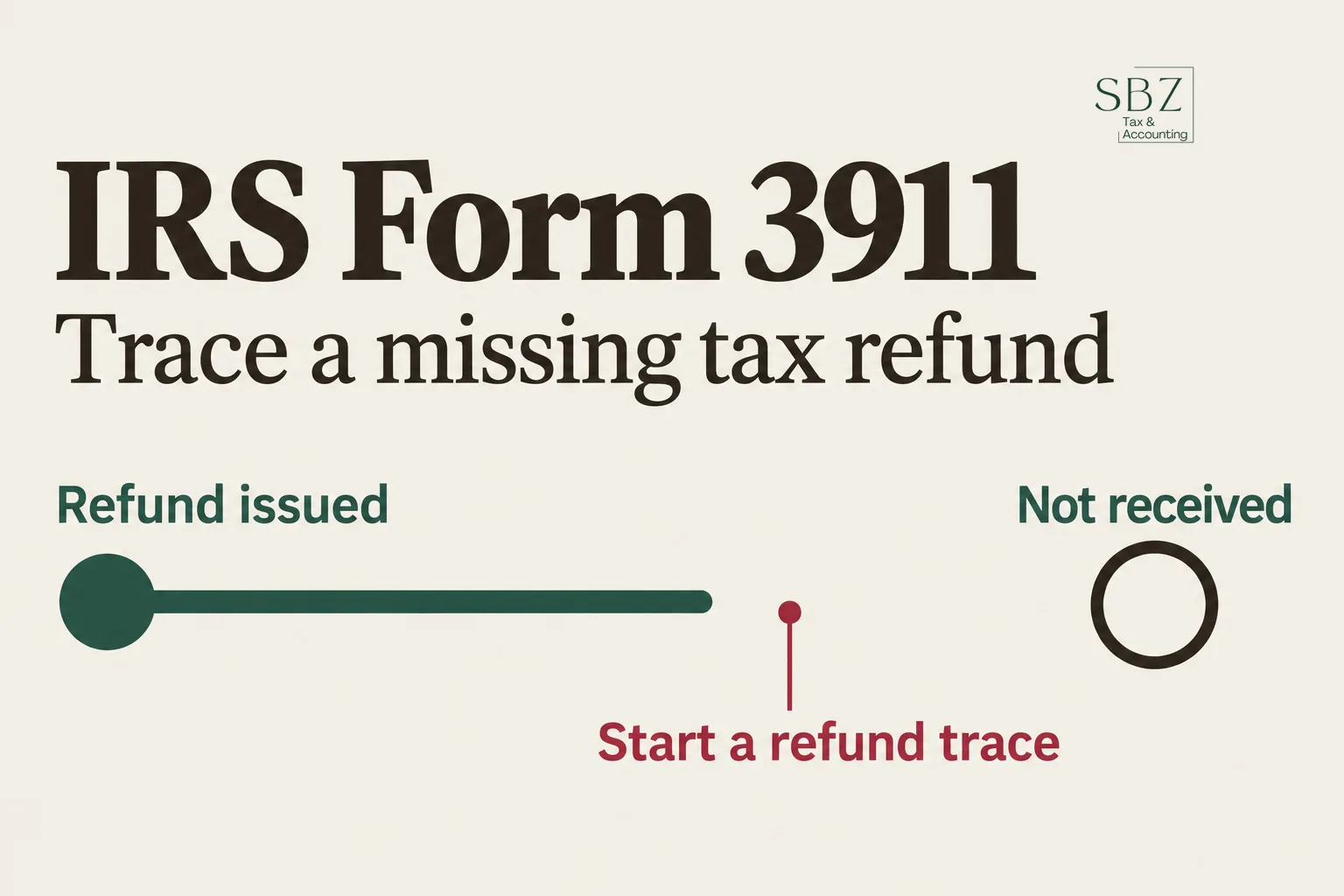
IRS Form 3911, Taxpayer Statement Regarding Refund, is the form you use to ask the IRS to trace a federal refund that you never received, or that arrived lost, stolen, or damaged. It starts a formal inquiry into where your money went. It is not the first thing to try, though, and filing it too early can just slow you down.
Here's the short version of when it makes sense, how to complete it, and what happens after you send it.
What is IRS Form 3911 used for?
Form 3911 is a refund trace request. You use it when the IRS shows your refund as issued, but the money never reached you.
Common situations include:
- A paper refund check never showed up in the mail.
- The check arrived but was lost, stolen, or destroyed before you could cash it.
- A direct deposit was sent but never landed in your account.
- A check was returned to the IRS as undeliverable, and you want it reissued.
The form is mostly used for individual refunds, but the same trace process exists for business refunds. Note what it is not: it is not a way to dispute the amount of your refund, and it is not an identity theft report. If someone filed a return using your Social Security number, that is a different process and a different form.
What should you do before filing Form 3911?
Check the status first. The IRS's Where's My Refund tool shows whether your return was received, approved, and sent. The IRS has generally said e-filed returns are processed in about 21 days, with paper returns taking longer, but processing times vary, so check the current guidance rather than trusting a number from memory.
Then work through this list:
- Confirm the address and account on your return. A typo in a routing number or a moved-away address is the most common cause of a missing refund.
- Call your bank if it was a direct deposit. The IRS will often point you back to the bank, since the deposit may have been rejected or posted to a different account.
- Check whether the refund was offset. Refunds can be applied to past-due federal or state debts, child support, or student loans. You would normally get a notice explaining the offset.
- Wait out the processing window. Calling or filing before the refund is actually overdue usually gets you nothing.
If Where's My Refund says the refund was sent and you still don't have it, that's the point where Form 3911 or a call to the IRS becomes the right move.
How do you fill out Form 3911?
The form is short, and you can download the current PDF from IRS.gov. It has you provide:
- Your identifying information: name, current address, Social Security number or taxpayer ID, and the tax year.
- Your prior address, if you moved after filing. This helps the IRS figure out where a mailed check went.
- Refund details: the expected amount, the type of return (such as Form 1040), and how you chose to receive it, by check or direct deposit.
- What went wrong: you check the box that matches your situation, such as not receiving the refund or a lost or stolen check.
- Your signature, and your spouse's if you filed jointly. An unsigned form is typically sent back.
Use the exact name and address on the return you filed, and have a copy of the return in front of you. If you're unsure of the refund amount, use the figure from your return rather than a guess.
Where do you send Form 3911?
You mail it to the IRS address listed in the form's own instructions, and that address depends on the state where you live. Don't rely on an address from a forum post or an old copy of the form, because filing locations change. Look at the instructions that come with the current version of the form.
Keep a copy of everything you send. Certified mail with a return receipt is a reasonable precaution, since this is a time-sensitive money claim.
You can also skip the paper entirely in many cases. The IRS individual line is 800-829-1040, and a representative can often start the trace by phone and tell you whether a form is needed. Many people find the phone route faster than mailing a form that sits in a queue.
What happens after you file?
The IRS opens a trace on your refund and checks whether the money was issued and where it went. This can take several weeks, and the IRS publishes its current timeframes, so check those rather than expecting a fixed number.
The outcome depends on what the trace finds:
- Check was never cashed: the IRS can cancel it and issue a replacement.
- Check was cashed: the IRS will send a claim package, and you may need to confirm that the signature on the check was not yours. The Bureau of the Fiscal Service can send you a copy of the cashed check so you can see who endorsed it.
- Direct deposit went to the wrong account: the IRS reviews the deposit details and tells you what recovery options exist, which often involve the bank.
If the delay is causing real financial hardship, the Taxpayer Advocate Service is an independent office inside the IRS that can step in on stalled cases. If the problem has dragged on or involves a larger tax dispute, our IRS and state tax problem help page explains how we handle those situations.
What if you haven't filed yet, or the refund was wrong?
A trace only helps if a refund was actually issued. If you never filed, you can still claim a refund for a prior year, but there are time limits, so see our guide on what to do if you missed the tax filing deadline.
If you got a refund but the amount looks off because you made an error, a trace won't fix it. That is a job for an amended return, covered in our walkthrough of Form 1040-X. And if your missing money is a state refund, the federal form doesn't apply. For California filers, that process is covered in California state tax refund status.
How do you avoid a refund problem next year?
Most refund trouble traces back to the filing itself. Many taxpayers reduce the odds by e-filing with direct deposit, double-checking the routing and account numbers, and updating their address with the IRS after a move. Some also review their withholding through tax planning so they aren't relying on one large refund each spring.
Frequently asked questions
Is IRS Form 3911 the same as checking Where's My Refund?
No. Where's My Refund shows the status of a refund. Form 3911 is the request you file when the status says the refund was sent but you never received it.
How long should you wait before filing Form 3911?
Wait until your refund is actually overdue under the IRS's current processing guidance, and check Where's My Refund first. Filing before then usually just delays the answer.
Can both spouses sign Form 3911 on a joint refund?
Yes, and on a joint return both spouses generally need to sign it. Check the current form instructions for the exact requirement.
Does Form 3911 work for a state tax refund?
No. Form 3911 is a federal IRS form. State refunds are traced through the state tax agency, which has its own process.
Where can you get the Form 3911 PDF?
The current PDF is free on IRS.gov. Download it from there rather than a third-party site, so you have the latest version and the correct mailing addresses.
Next step
If your refund is missing and you're not sure whether to file Form 3911, call, or wait, start with Where's My Refund and your bank, then use the form if the trace is warranted. If you'd like a second set of eyes on the situation, you can book a free consultation with SBZ Tax, call 818-748-2020, or visit our office. We work with taxpayers nationwide.
This article is general information, not tax advice for your specific situation. Talk to a qualified tax professional about your circumstances.