On this page
- What is the IRS Business and Specialty Tax Line?
- What are the hours for the IRS Business and Specialty Tax Line?
- What should you have ready before you call?
- When is calling the wrong move?
- What if the call is about a balance or collection notice?
- How can you avoid needing the line at all?
- Frequently asked questions
- What's the next step?
IRS Business and Specialty Tax Line: Phone Number, Hours, and What They Can Help With
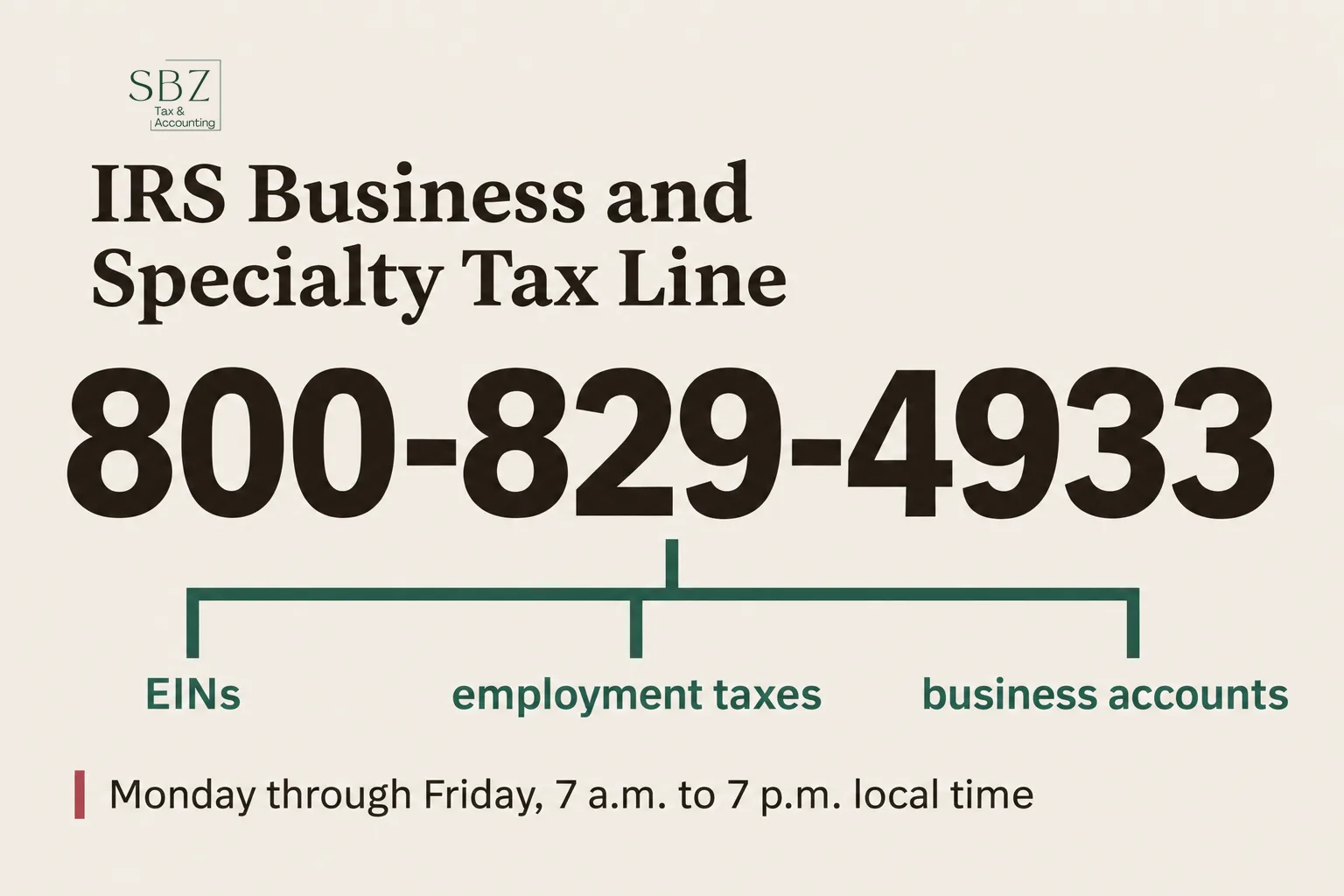
The IRS Business and Specialty Tax Line is the IRS phone service for business tax questions, and its toll-free number is 800-829-4933. It covers business accounts, EINs, employment tax filings, and similar topics. It does not cover personal Form 1040 questions.
Here's the short version of who should call, what to have in hand, and when another route will get you an answer faster.
What is the IRS Business and Specialty Tax Line?
It's the IRS's general help line for businesses. Corporations, partnerships, S corporations, sole proprietors with an EIN, and employers with payroll can use it to ask about their business tax account.
Typical reasons to call include:
- Questions about an Employer Identification Number (EIN), including a lost or unconfirmed one
- Employment tax forms and notices, such as Forms 941, 944, and 945
- Business return filing requirements and where to send paperwork
- A balance, penalty, or notice tied to a business account
- Changing the responsible party or address on a business account
Some topics go elsewhere. Individual income tax questions use the separate individual line (800-829-1040). Tax-exempt organizations and certain government entities have their own dedicated service. Check the IRS "Let Us Help You" pages on IRS.gov for the current routing before you dial.
What are the hours for the IRS Business and Specialty Tax Line?
The IRS has published the hours as Monday through Friday, 7 a.m. to 7 p.m. local time. Phone hours and wait times change, especially around filing deadlines, so confirm the current schedule on IRS.gov before you plan your day around it.
Expect long holds. Mornings early in the week tend to be busy, and the weeks around quarterly payroll deadlines and March and April are worse. Many people find that calling shortly after opening goes better, though nothing is guaranteed.
What should you have ready before you call?
The agent has to confirm you're allowed to discuss the account, so preparation saves a second call. Have these in front of you:
- The business's legal name, EIN, and address as the IRS has it
- Your name, title, and Social Security number if you're the responsible party
- The relevant tax form and period (for example, Form 941 for the second quarter)
- Any IRS notice, including the notice number printed in the corner
- Prior-year return details if the question involves a filed return
The IRS generally speaks only with someone it can verify as the responsible party, an authorized officer or partner, or a representative with a valid power of attorney. If a professional will handle the call, the business signs Form 2848 (power of attorney) or Form 8821 (tax information authorization) first.
When is calling the wrong move?
A phone call isn't always the best tool. For several common requests, a form or an online account is faster and leaves a paper trail.
You need an EIN. Most applicants can apply for free on IRS.gov. Form SS-4 walks through each line, and beware of paid sites that charge for something the IRS gives away.
You lost your EIN confirmation. Look first at old bank paperwork, prior returns, and the original IRS notice. If you need official proof, the IRS issues a letter on request, which Form 147C and the EIN verification letter cover.
You need a copy of your account or return history. A transcript is quicker than explaining it to an agent. Here's how to get an IRS tax transcript online, by mail, or through a pro.
Your address changed. Notices sent to an old address are a common source of missed deadlines. Form 8822 (and 8822-B for businesses) handles that in writing.
You're not sure which form to file. Employers often confuse the filing frequencies. Form 941 is the usual quarterly return, while some very small employers are eligible for the annual Form 944. Confirm which one the IRS assigned to you before you assume.
What if the call is about a balance or collection notice?
Calling to explain a balance is fine, but go in with a plan. The line handles general account questions. It isn't built for negotiating a settlement or resolving a complicated dispute, and a phone agent can't change what's on your return.
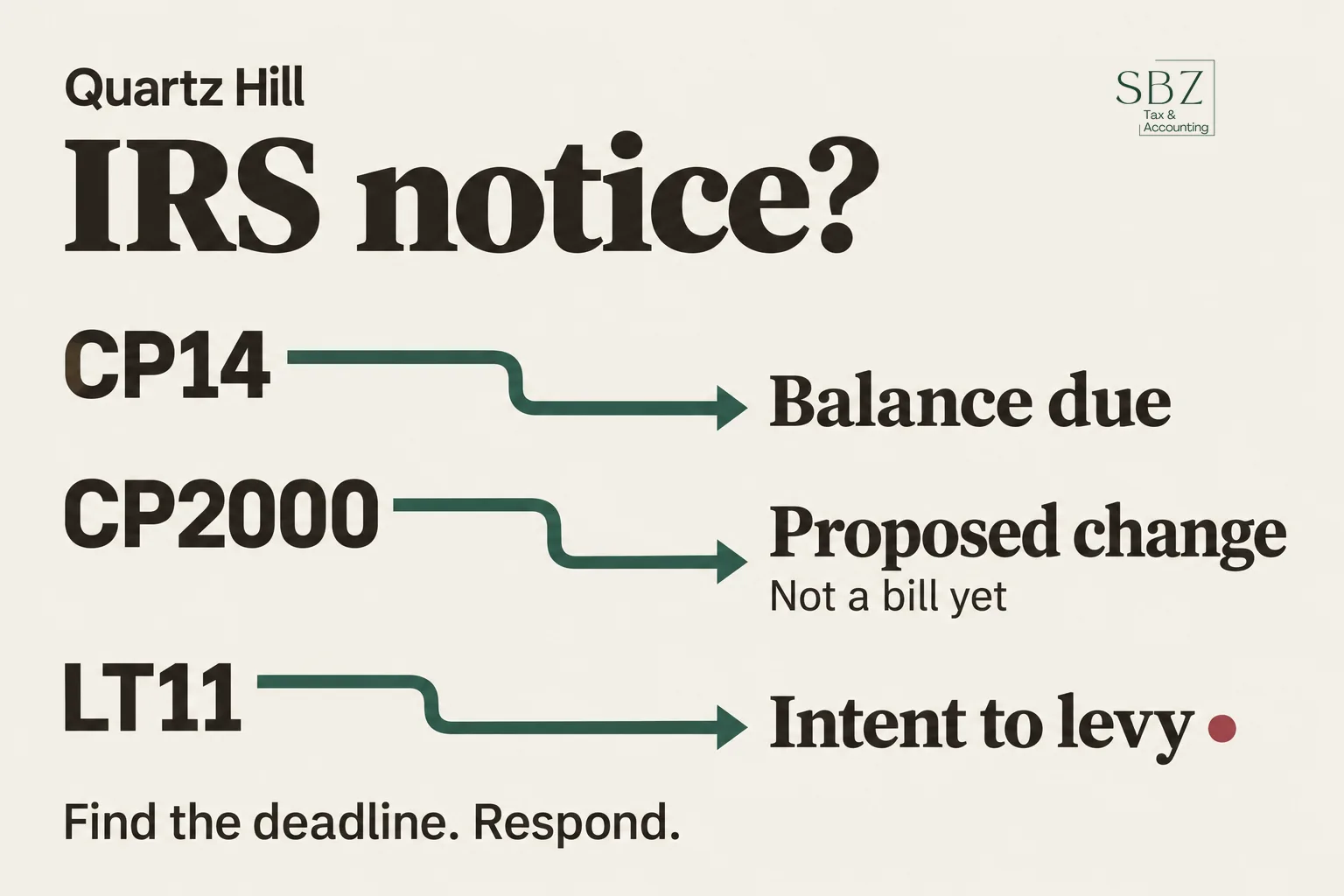
If you owe and can't pay in full, the IRS offers payment plans. Many small businesses start with a request for an installment agreement on Form 9465 rather than waiting on hold. If the notice threatens a levy or lien, take it seriously and get help early. Our page on IRS and state tax problem help explains how that process usually runs.
Whatever you decide, get the agent's name and ID number, the date and time, and a summary of what was said. Write it down while you're still on the phone.
How can you avoid needing the line at all?
Most business-line calls trace back to a handful of avoidable problems: a filing that was missed, a deposit that was misapplied, a notice sent to an old address, or books that don't reconcile to what was reported. Clean records prevent most of them.
Monthly bookkeeping catches mismatches before they become notices. Choosing the right entity and filing on time keeps you off the penalty list, and if you're weighing a change, our overview of S-corp and business tax services explains what's involved. Planning ahead through tax planning also reduces year-end surprises.
SBZ Tax works with small businesses in Palmdale and across the Antelope Valley, and remotely nationwide. If a call to the IRS keeps going nowhere, a second set of eyes on the notice often helps.
Frequently asked questions
What is the IRS Business and Specialty Tax Line phone number?
The toll-free number is 800-829-4933. Confirm it on IRS.gov before calling, since the IRS can update numbers and routing.
Is the IRS Business and Specialty Tax Line open on weekends?
The IRS has published Monday through Friday hours, 7 a.m. to 7 p.m. local time. It has not been a weekend line. Check IRS.gov for the current schedule.
Can my accountant call the IRS business line for me?
Yes, with proper authorization. The business typically signs Form 2848 or Form 8821 naming the professional, and the IRS verifies it before discussing the account.
Can I get an EIN by calling the business line?
Most applicants should use the free online application instead. Phone EIN service is mainly intended for certain applicants without a Social Security number or ITIN.
Is the IRS business tax line the same as the personal tax line?
No. The business line handles business accounts, and individual income tax questions go to a separate IRS number. Calling the wrong one usually means being transferred or told to call back.
What's the next step?
Write down your question, gather the notice and EIN, and decide whether a form or online account can answer it first. If you'd rather not spend an hour on hold, call SBZ Tax at 818-748-2020 or visit our office at 190 Sierra Ct Ste 335, Palmdale, CA 93550. You can also book a free consultation and we'll look at the notice together.
This article is general information, not tax advice for your specific situation. Talk with a qualified tax professional about your circumstances.