
On this page
- What actually happens when you miss the deadline?
- What if you're actually owed a refund?
- The extension confusion: what it does and doesn't do
- What should you do right now?
- Can you get the penalties reduced?
- What if you can't afford to pay the tax you owe?
- The part people miss: state taxes
- Where to go from here
- Frequently asked questions
Missed the Tax Filing Deadline? Here's What to Do Now
If you missed the tax deadline, the single most important move is to file as soon as possible—even if you can't pay what you owe. The longer you wait, the more expensive it gets.
Here's a clear-eyed look at where you stand and what to do next.
What actually happens when you miss the deadline?
The IRS charges two separate penalties when you fall behind, and they run at the same time.
Failure-to-file penalty: 5% of your unpaid taxes for each month (or part of a month) your return is late, up to a maximum of 25%. This is the bigger one. If you owe $5,000 and file five months late, you're looking at an extra $1,250 just in this penalty.
Failure-to-pay penalty: 0.5% per month on the unpaid balance, also capped at 25%. If both penalties apply in the same month, the IRS reduces the failure-to-file rate to 4.5%, so the combined monthly hit is 5% rather than 5.5%.
Interest: On top of penalties, interest accrues on the unpaid balance. The rate is the federal short-term rate plus 3%, compounded daily. It's not huge month-to-month, but it compounds, and it doesn't stop until the balance is paid.
The practical upshot: an unfiled return with a tax balance due is one of the fastest ways to turn a manageable tax bill into a painful one.
What if you're actually owed a refund?
If you're getting money back, there's no failure-to-file penalty. The IRS doesn't penalize you for filing late when you have a refund coming—they just hold onto your money until you claim it.
The deadline to claim a refund is three years from the original due date of the return. After that window closes, the refund is gone. So there's no urgency driven by penalties, but there is urgency if you want what's owed to you.
The extension confusion: what it does and doesn't do
A lot of people think they filed an extension and are therefore "fine." Here's where that assumption can hurt you.
An extension gives you more time to file—not more time to pay.
Form 4868 (for individuals) pushes your filing deadline from April 15 to October 15. But any taxes you owed were still due on April 15. If you extended and didn't pay your estimated balance, the failure-to-pay penalty has been running since that original deadline.
Business returns work the same way. S-corps and partnerships use Form 7004, which extends the filing deadline but not the payment deadline.
If you didn't file an extension and the deadline has already passed, you can't go back and file one after the fact. The extension had to be submitted by the original due date.
What should you do right now?
Step 1: File the return immediately.
Even if you can't pay a dollar of what you owe, file the return today. Every month your return sits unfiled, the 5% failure-to-file penalty keeps running. Filing stops that clock even if your balance remains unpaid.
Step 2: Pay as much as you can right now.
Sending partial payment reduces the balance the failure-to-pay penalty is calculated on. It's not all-or-nothing—pay what you have.
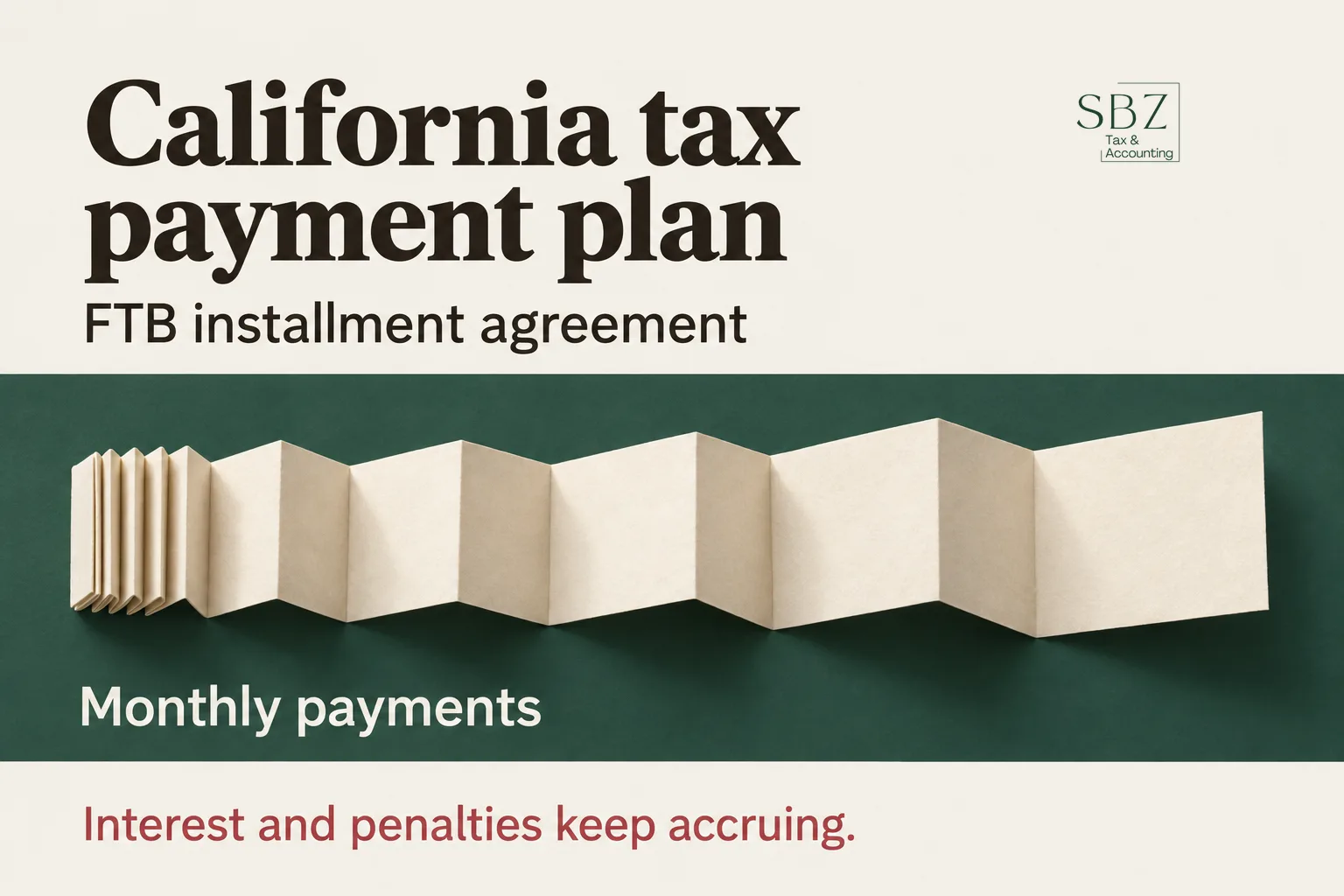
Step 3: Set up a payment plan if you can't pay in full.
The IRS offers installment agreements. If you owe $50,000 or less in combined tax, penalties, and interest, you can typically qualify for a streamlined installment agreement online through IRS.gov without providing detailed financial information. The failure-to-pay penalty rate drops from 0.5% to 0.25% per month once you're on an approved installment agreement.
Step 4: Keep filing future returns on time.
A common pattern is to fall behind on one year, then miss the next because you're embarrassed or overwhelmed. Each additional unfiled year adds new penalties and compounds the problem. Get current and stay current.
Can you get the penalties reduced?
Sometimes yes, and it's worth knowing about.
First-Time Penalty Abatement (FTA)
The IRS has an administrative waiver called First Time Abate. If you have a clean compliance history—no penalties in the prior three years, all required returns filed (or valid extensions submitted), and you've paid or made arrangements to pay your balance—you can request that the IRS waive the failure-to-file and failure-to-pay penalties.
You can request FTA by calling the IRS directly or by filing Form 843. Many people who qualify never ask. The IRS doesn't volunteer it.
Reasonable Cause
If FTA doesn't apply (say, you've had issues before), the IRS will also consider penalty abatement based on reasonable cause. Serious illness, a natural disaster, the death of an immediate family member, or records being destroyed in a fire are the kinds of things that qualify. "I was busy" and "I forgot" don't.
Both abatement routes require that the underlying tax is paid (or being paid through a plan) before the IRS will remove the penalties.
What if you can't afford to pay the tax you owe?
A few options exist beyond the standard installment agreement.
Currently Not Collectible (CNC): If you can demonstrate that paying anything right now would prevent you from covering basic living expenses, the IRS can temporarily halt collection activity. Penalties and interest continue to accrue, but the IRS stops sending notices and initiating collection actions. This is a temporary status, not forgiveness.
Offer in Compromise (OIC): This allows eligible taxpayers to settle their tax debt for less than the full amount owed. The bar is high—the IRS will accept an offer only if it represents the most they can reasonably expect to collect, given your income, assets, and expenses. The IRS publishes a pre-qualifier tool that can help gauge eligibility before applying.
Neither path is simple or fast. But they exist, and they're worth understanding if the balance is large.
The part people miss: state taxes
Missing the federal deadline often means missing a state deadline too. Most states have their own penalties and interest, often with their own payment plan and abatement processes. If you're behind federally, assume you're behind with your state as well and address both.
Where to go from here
If your return isn't filed yet, file it today—even a skeleton return. If you're not sure what you owe, estimate and pay something. If you think you might qualify for penalty abatement, ask.
The worst outcome is continuing to wait while penalties compound. Every month of inaction is a choice that costs money.
This article is general information, not tax advice for your specific situation. Tax rules can change and individual circumstances vary—consult a tax professional about your particular case.
Frequently asked questions
Should you file even if you cannot pay the balance?
Yes. Filing stops the failure-to-file penalty from continuing to grow.
Does an extension provide more time to pay?
No. It extends the filing deadline, while the original payment deadline still applies.
Is there a failure-to-file penalty when a refund is due?
No. The IRS holds the refund until it is claimed, and the article notes a three-year claim window.