On this page
- How much is the failure-to-deposit penalty?
- What counts as a late deposit?
- Why do penalties show up when you think you paid?
- How do you get the penalty removed?
- How do you submit the request?
- What if the deposits are actually unpaid?
- How do you stop it from happening again?
- Related reading
- Frequently asked questions
Payroll tax deposit penalties are a percentage of the deposit you paid late or not at all, ranging from 2% to 15%, and they can often be removed through first-time penalty abatement or a reasonable cause request. The penalty comes from Internal Revenue Code section 6656 and is separate from interest and from any penalty for filing Form 941 late.
This article covers how the penalty is calculated, why the notice is sometimes wrong, and the order to work in if you want it removed.
How much is the failure-to-deposit penalty?
The rate depends on how many days late the deposit was. These are the standard tiers under section 6656:
| Deposit is late by | Penalty |
|---|---|
| 1 to 5 calendar days | 2% of the unpaid deposit |
| 6 to 15 calendar days | 5% |
| More than 15 days | 10% |
| Unpaid more than 10 days after the first IRS notice, or after a demand for immediate payment | 15% |
| Not made through electronic funds transfer when required | 10% |
Interest runs on top of the penalty and on the tax itself. If the IRS later abates the penalty, the interest that accrued on the penalty comes off with it. The interest on the underlying tax stays.
What counts as a late deposit?
Your deposit schedule is set by a lookback period. Employers who reported $50,000 or less in payroll taxes during the lookback period are monthly depositors, and deposits are due by the 15th of the following month. Larger employers are semiweekly depositors, and deposits are due the Wednesday or Friday after the payday, depending on the day of the week.
Two other rules catch growing businesses. Once an employer accumulates $100,000 or more in a single day, the deposit is due the next business day, and the employer becomes a semiweekly depositor for the rest of the year and the next. If your liability for a quarter is under $2,500, you can pay it with the return instead of depositing.
If you are not sure which schedule you are on, the explanation of the return itself is in our guide to Form 941. Annual filers using Form 944 and employers who withhold on non-payroll payments with Form 945 follow deposit rules too.
Why do penalties show up when you think you paid?
The part people miss is that many deposit penalties are caused by how the IRS applied a payment, not by a missed payment. Three situations come up repeatedly:
- Misapplied deposits. If you do not designate the period a deposit is for, the IRS applies it to the most recent tax period with a balance. That can leave an older period looking underpaid and trigger the penalty.
- A mismatch between Form 941 and the deposits. Payroll software that calculated the liability differently than what was deposited can produce a shortfall on paper.
- Schedule errors. Reporting on the wrong deposit schedule on the return can make on-time deposits look late.
If your records show the money went out on time, you may not need abatement at all. You may need a designation of deposits, which lets you tell the IRS how to apply a payment. The IRS generally allows this within 90 days of the penalty notice. A mix-up here is worth checking before you ask for forgiveness.
How do you get the penalty removed?
There are two main routes, and the IRS tests them in this order.
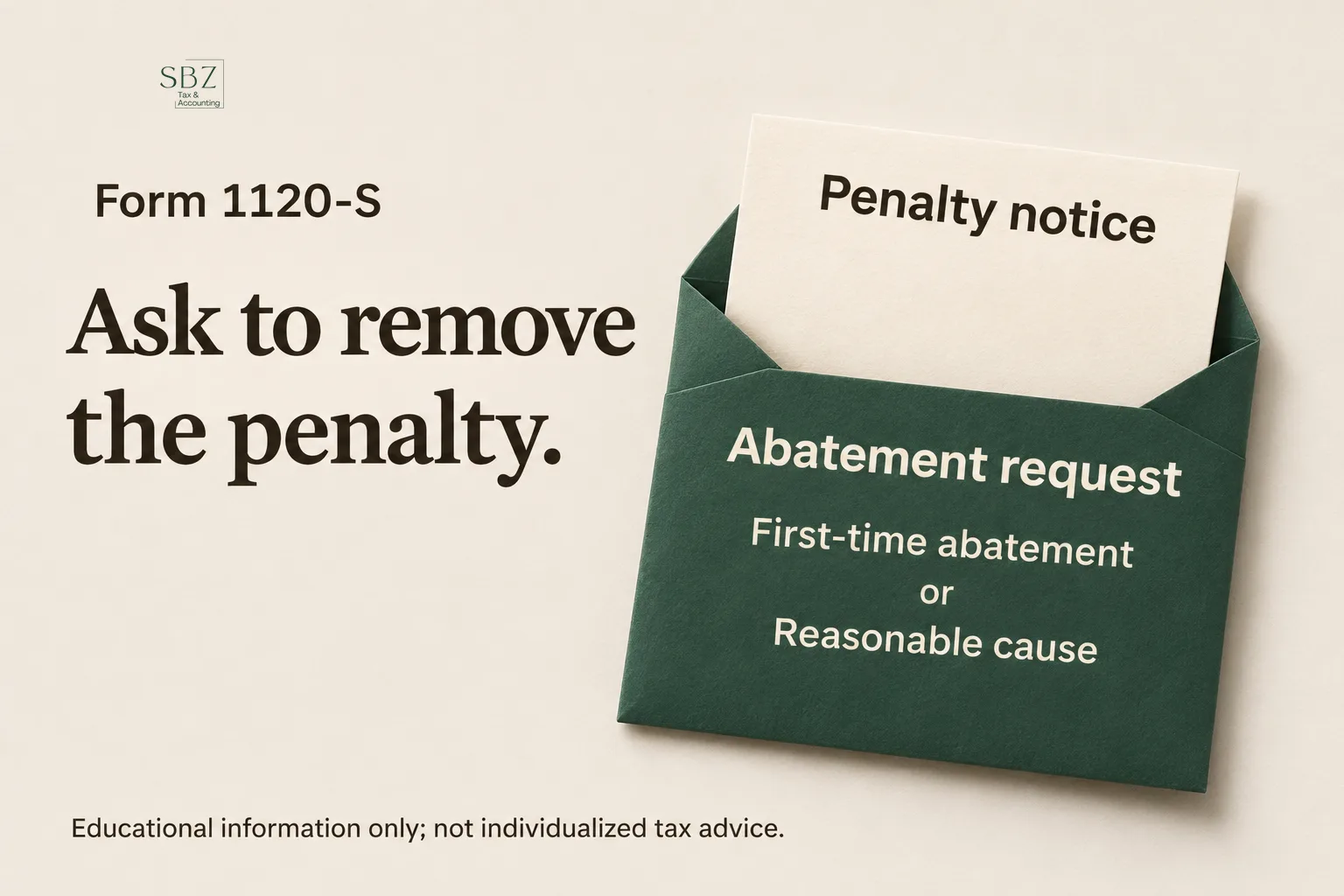
First-time abatement. The IRS has an administrative waiver for taxpayers with a clean compliance history. In general you qualify if you filed, or properly extended, all required returns, had no penalties in the prior three years (or they were abated for reasons other than first-time abatement), and have paid or arranged to pay the tax due. The mechanics and limits are covered in our guide to first-time penalty abatement. It applies to failure-to-deposit penalties, but it applies to one tax period at a time, so a series of late quarters needs a plan.
Reasonable cause. If you do not qualify for first-time abatement, you can argue the failure was due to reasonable cause and not willful neglect. Circumstances the IRS has accepted in the past include a serious illness, a death in the immediate family, a disaster, or reliance on written advice from a tax professional. A cash-flow shortage alone is rarely enough, and the IRS looks at whether you paid other creditors ahead of payroll taxes.
Whichever route you use, state the facts plainly, attach support, and tell the IRS you are current. A well-organized request is easier to approve than a long explanation.
How do you submit the request?
You can respond to the penalty notice by phone, by letter, or by filing Form 843, Claim for Refund and Request for Abatement. If the penalty was already paid, Form 843 is the usual path to get it refunded. Include the tax period, the employer identification number, the penalty amount, and the specific basis for relief.
If someone else will talk to the IRS for you, a Form 2848 power of attorney must be on file first. Keep the notice number and the reply date in front of you. Responding by that date matters more than perfecting the letter.
What if the deposits are actually unpaid?
Penalty relief does not erase the tax. If the payroll taxes themselves are unpaid, the first priority is to get current on new deposits and then deal with the old balance. Our guide to paying federal business taxes covers payment options when you cannot pay in full.
Unpaid payroll tax is also the most serious balance an employer can owe. The withheld income tax and employee share of Social Security and Medicare are trust fund taxes. If they are not paid over, the IRS can assess the trust fund recovery penalty under section 6672 against the responsible individuals personally, up to 100% of the unpaid trust fund amount. That can include owners, officers and sometimes a bookkeeper with signing authority. If you have received a letter proposing this penalty, treat it as a collection matter and start with our overview of IRS and state tax problem help. If a levy notice follows, the Collection Appeals Program may also be relevant.
How do you stop it from happening again?
Most repeat deposit penalties come from process, not intent. Three habits cut the risk:
- Make deposits through EFTPS or your payroll provider on the same day payroll runs, not at quarter end.
- Reconcile payroll liability to deposits every month. Clean monthly bookkeeping makes a mismatch visible in weeks, not after a notice.
- Confirm your deposit schedule each year, especially if headcount or payroll grew. Also check that the Form 940 FUTA deposits are keeping up.
State payroll taxes have their own deposit rules and penalties, so check your state agency as well. If you have California employees, see California payroll taxes for what is withheld and filed.
This is general information, not tax advice for your specific situation. Penalty relief depends on your compliance history and facts, so talk to a qualified tax professional before you submit a request.
Related reading
Frequently asked questions
What is the penalty for depositing payroll taxes late?
It is 2% if the deposit is 1 to 5 days late, 5% if 6 to 15 days late, and 10% if more than 15 days late. It rises to 15% if the amount is still unpaid more than 10 days after the IRS's first notice or a demand for immediate payment.
Can the IRS remove a payroll deposit penalty?
Yes. Many employers qualify for first-time abatement if their filing and penalty history is clean, and others can request relief for reasonable cause. Approval is not guaranteed and depends on the facts.
Does first-time abatement cover several quarters of late deposits?
Not automatically. The IRS generally applies it to the earliest eligible tax period, and later periods usually need a reasonable cause argument or a separate review. Work with the full list of periods in front of you before you ask.
Is a deposit penalty the same as the trust fund recovery penalty?
No. The deposit penalty is a percentage charged to the business for paying late. The trust fund recovery penalty is a personal assessment against responsible individuals for withheld taxes that were never paid over.
If you have a payroll tax penalty notice in hand, check the reply date on the letter first, then book a free consultation and bring the notice.