On this page
California Use Tax: What It Is, Who Owes It, and How to Pay
California use tax is a self-reported tax owed on purchases you made from out-of-state sellers when California sales tax wasn't collected — and if you've bought equipment from an out-of-state vendor, ordered supplies from an online retailer, or picked up goods at a trade show in Nevada, there's a reasonable chance you've had exposure at some point.
What exactly is California use tax?
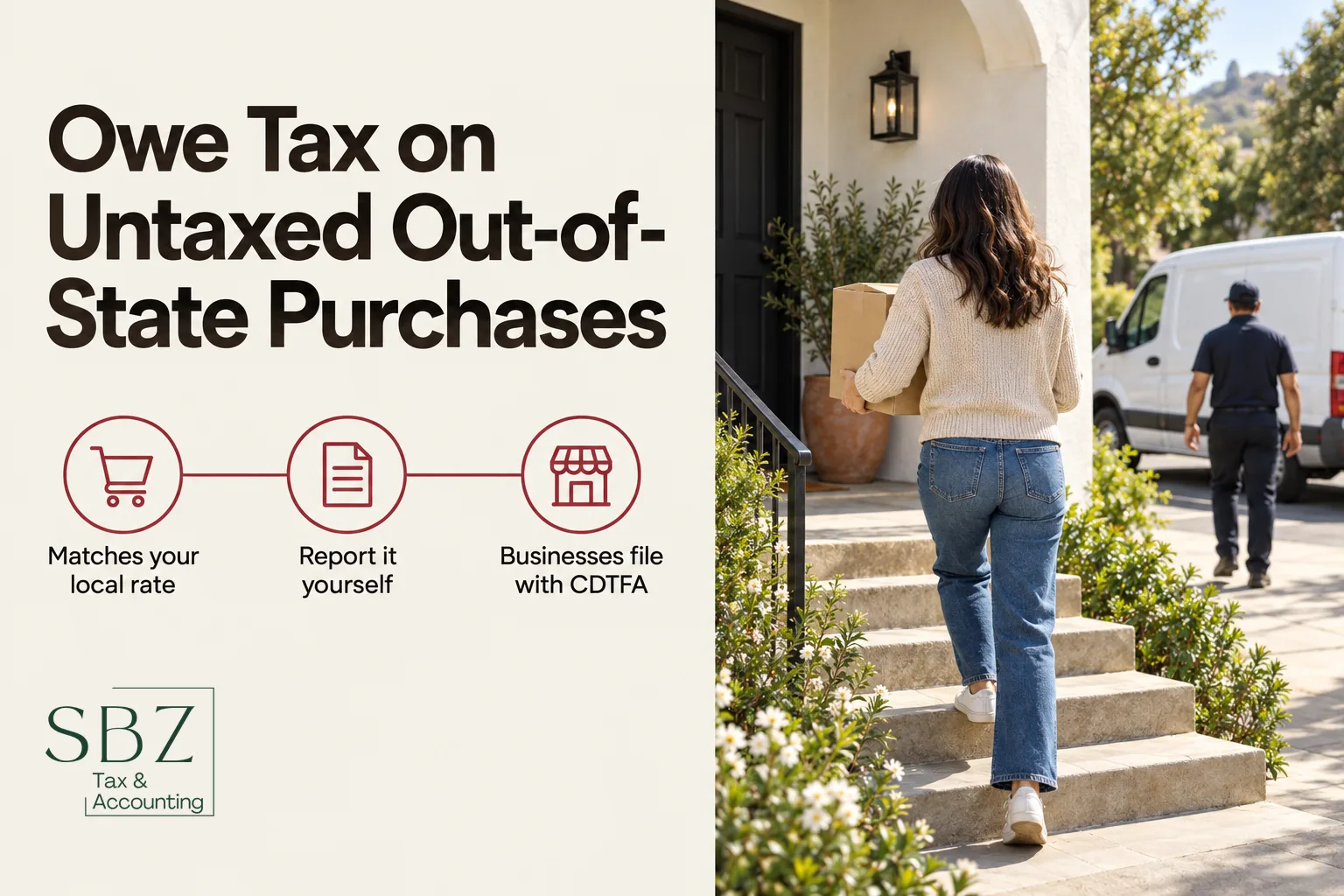
Use tax is the mirror image of sales tax. When a California seller charges you sales tax at checkout, that transaction is covered. When an out-of-state seller doesn't collect California tax — which happens regularly with online orders, catalog purchases, and business-to-business transactions across state lines — use tax applies instead.
The rate is identical to California's sales tax: the statewide base rate is 7.25%, plus any applicable district taxes for your location. The California Department of Tax and Fee Administration (CDTFA) administers both taxes, which is why you'll often see the term "California sales and use tax" used as a single phrase. The two taxes are designed to tax the same transactions — the only difference is which party does the collecting.
Who actually owes California use tax?
Both individuals and businesses can owe use tax. The common triggers:
- You bought a taxable item from an out-of-state online retailer and no California sales tax appeared on your invoice
- You purchased equipment, supplies, or promotional materials at an out-of-state trade show and brought them back to California
- You ordered inventory or business assets from a vendor who didn't collect California tax
- You leased equipment from an out-of-state lessor
Businesses tend to carry more use tax exposure because they make more purchases — and out-of-state vendors don't always know which states require them to collect. If you use monthly bookkeeping services and track your vendor invoices closely, spotting use tax liability is straightforward: look for any business purchase where zero sales tax was charged and the item is being put to use in California.
What kinds of purchases are subject to use tax?
The same general rules that apply to California sales tax apply here. Tangible personal property — physical goods — is taxable unless an exemption applies. Common exemptions:
- Purchases for resale: Inventory you intend to sell isn't subject to use tax (your customers pay sales tax instead)
- Manufacturing inputs: Items directly incorporated into a manufactured product may qualify for an exemption
- Tax already paid to another state: California credits taxes paid to another state's sales tax, up to the California rate — so if you paid 6% to Arizona and California's rate is 8.25%, you'd owe the difference
Office furniture, computers, software licenses, signage, and most business supplies generally don't qualify for an exemption. If you're sorting through which purchases carry liability, tax planning services can help you do that analysis before a CDTFA audit does it for you.
How do businesses report California use tax?
If your business is registered with the CDTFA and files sales and use tax returns, use tax is reported on that same return — there's a dedicated line for it, and it's paid alongside any sales tax collected.
If your business is service-only and isn't CDTFA-registered, you're still responsible. You can register directly with the CDTFA to report and pay, or include eligible amounts on your California business tax return.
One thing many business owners don't realize: the CDTFA can audit use tax liability going back three years — or much longer if a return was never filed or in cases of fraud. If you've been making out-of-state purchases for years without reporting use tax, that's an exposure worth quantifying. Addressing it proactively is almost always better than waiting. If the back-period looks significant, IRS and state tax problem help covers CDTFA situations, not just federal ones.
For businesses managing more complex tax positions — multiple vendors, varied purchase types, multi-year gaps — working with a fractional CFO who understands California tax obligations can help build a clean reporting process going forward.
How do individuals report use tax in California?
For individuals, California has simplified the reporting process. When you file your California state income tax return (Form 540), there's a use tax line where you can:
- Report the actual amount you owe based on your purchase records, or
- Use the CDTFA's use tax lookup table, which gives a flat estimated amount based on your adjusted gross income — built for people who made a handful of small online purchases throughout the year
The lookup table applies only to individual purchases under $1,000. If you bought a $2,000 desk from an out-of-state retailer and no California tax was collected, that needs to be reported at the full amount — the table won't cover it.
Most individuals owe a relatively modest amount, but the state has become more effective at identifying gaps through third-party data. The self-reporting line on Form 540 exists precisely because most people have some level of use tax owed and most people don't know it.
Is use tax the same as sales tax in California?
The rate is the same; the mechanics differ. Sales tax is collected by the seller and remitted to the CDTFA. Use tax is self-reported by the buyer when the seller didn't collect.
You won't owe both on the same transaction. If a seller collected California sales tax, you don't separately owe use tax. The two taxes function as a closed loop — any taxable transaction that falls through the sales tax side gets picked up on the use tax side.
If you're a small business owner just getting organized on this, solid books are the foundation. Bookkeeping basics — specifically tracking which vendor invoices included tax and which didn't — makes use tax reconciliation considerably easier, whether you do it annually or quarterly.
For business owners who also want to understand how their entity structure interacts with sales and use tax obligations, the relationship between S-corp and business tax services and California's tax requirements is worth walking through with a professional.
Frequently asked questions
Do I owe California use tax on Amazon purchases?
If Amazon collected California sales tax at checkout — which they do for most orders as a registered marketplace facilitator — you don't separately owe use tax. If you purchased from a third-party seller on the platform and no California tax appeared on your receipt, use tax may apply. Check your order history to confirm what taxes were charged.
What's the California use tax rate?
The statewide base rate is 7.25%. Most California locations add district taxes on top of that, bringing the effective rate to roughly 8.25%–10.75% depending on the jurisdiction. Use the CDTFA's online rate lookup tool to find the exact rate for your address.
Can I deduct use tax paid on business purchases?
Generally, yes — California use tax paid on business purchases is deductible as a business expense, the same way sales tax on a business purchase would be. Keep your CDTFA payment records and link them to the underlying purchase. If you're filing business taxes and want to make sure these amounts are captured correctly, that's a detail worth flagging to your preparer.
What if I paid sales tax to another state on the same purchase?
California gives you a credit for sales tax paid to another state, up to the California rate. If you paid 8% to Nevada and California's rate for your location is 9%, you'd owe the 1% difference as use tax. If you paid more than California's rate, you owe nothing — but there's no refund for the excess.
Is there a dollar threshold below which use tax doesn't apply?
There's no official de minimis exemption — use tax technically applies to any taxable out-of-state purchase regardless of amount. For individuals, the CDTFA's lookup table is designed to capture low-level purchases without requiring itemization. For businesses, every taxable purchase with no California tax collected is reportable.
This article is general tax information, not advice tailored to your specific situation. California use tax rules vary based on purchase type, business structure, and reporting history. Consult a qualified tax professional for guidance on your circumstances.